Fingular is an international neobanking startup targeting Asian markets. I joined the team to build a design system that would work seamlessly across web and mobile platforms. The goal was to create a reusable, scalable design foundation that could support multiple products within the ecosystem.
My roles
Design system designer
Platforms
Web
iOS
Android
Date
Feb. 2024 – Aug. 2024
When I joined the project, the design infrastructure was in poor shape:
Figma files structure
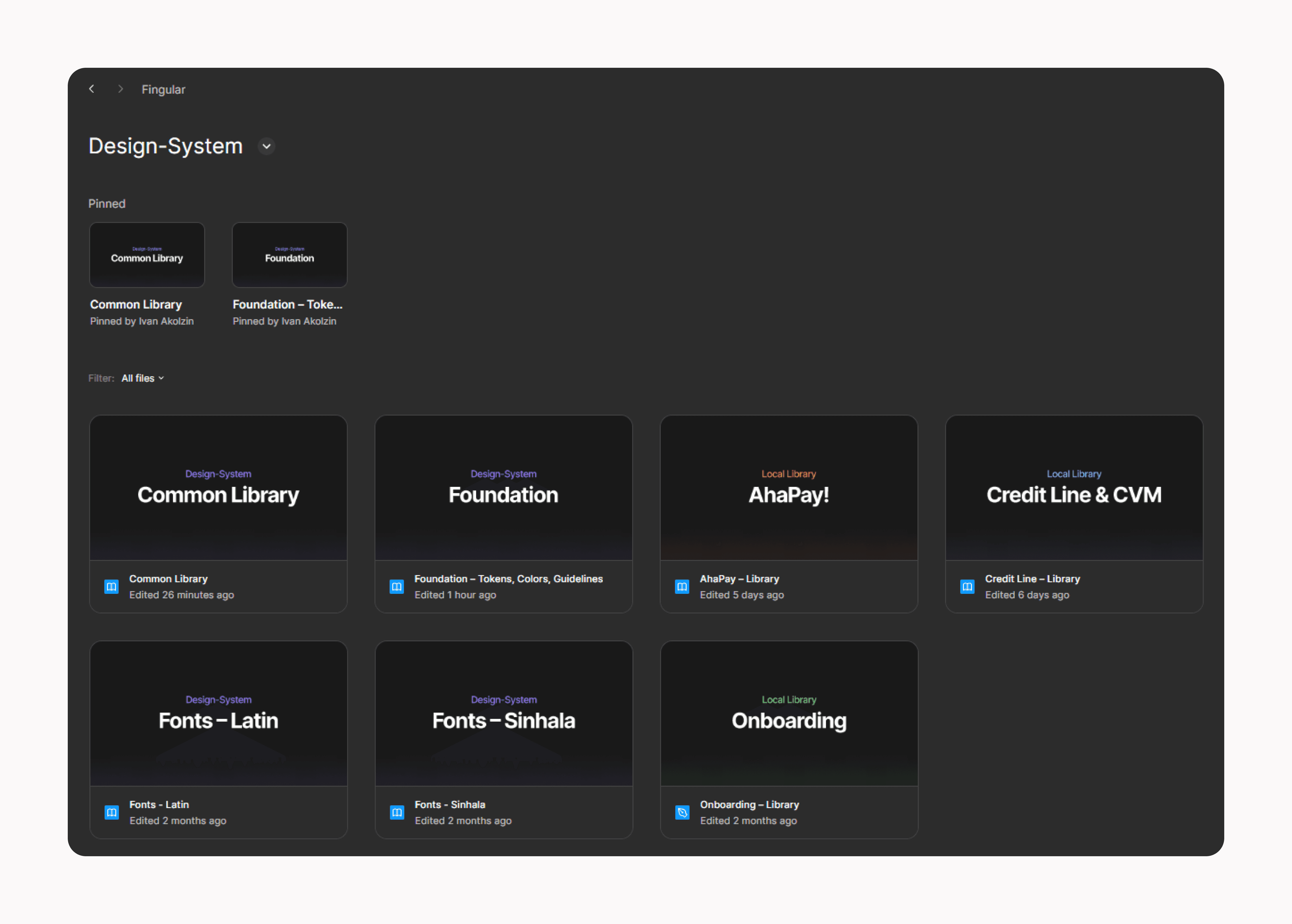
To keep the system scalable and easy to maintain, I built a two-level Figma structure:
Core file — shared components, tokens, colors, grids, and typography as the single source of truth.
Local files — team-specific libraries linked to the core, ensuring consistency without overload.
Each file follows a simple hierarchy — Tokens, Base, Components, Documentation — making navigation and onboarding much easier.
Components & Documentation
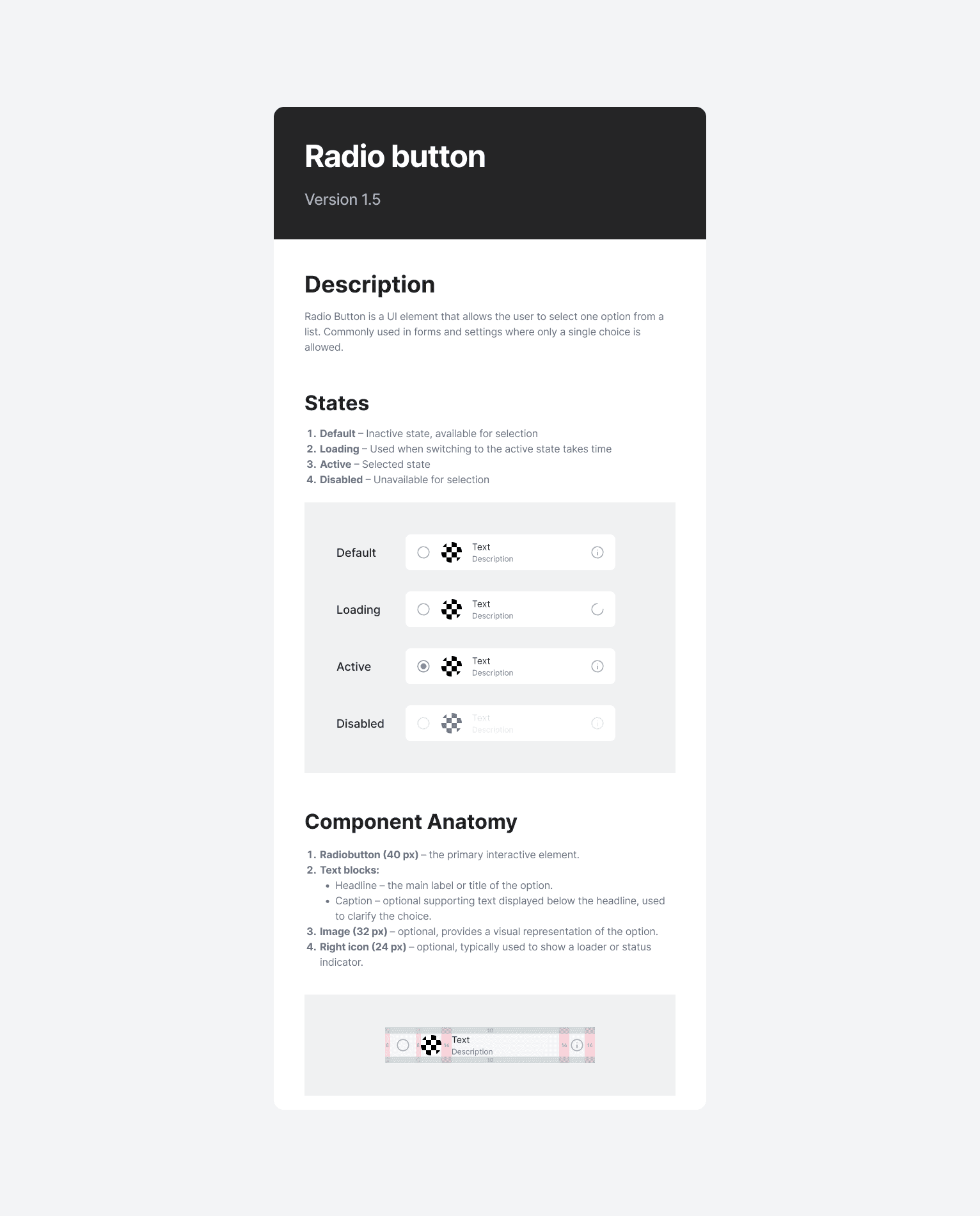
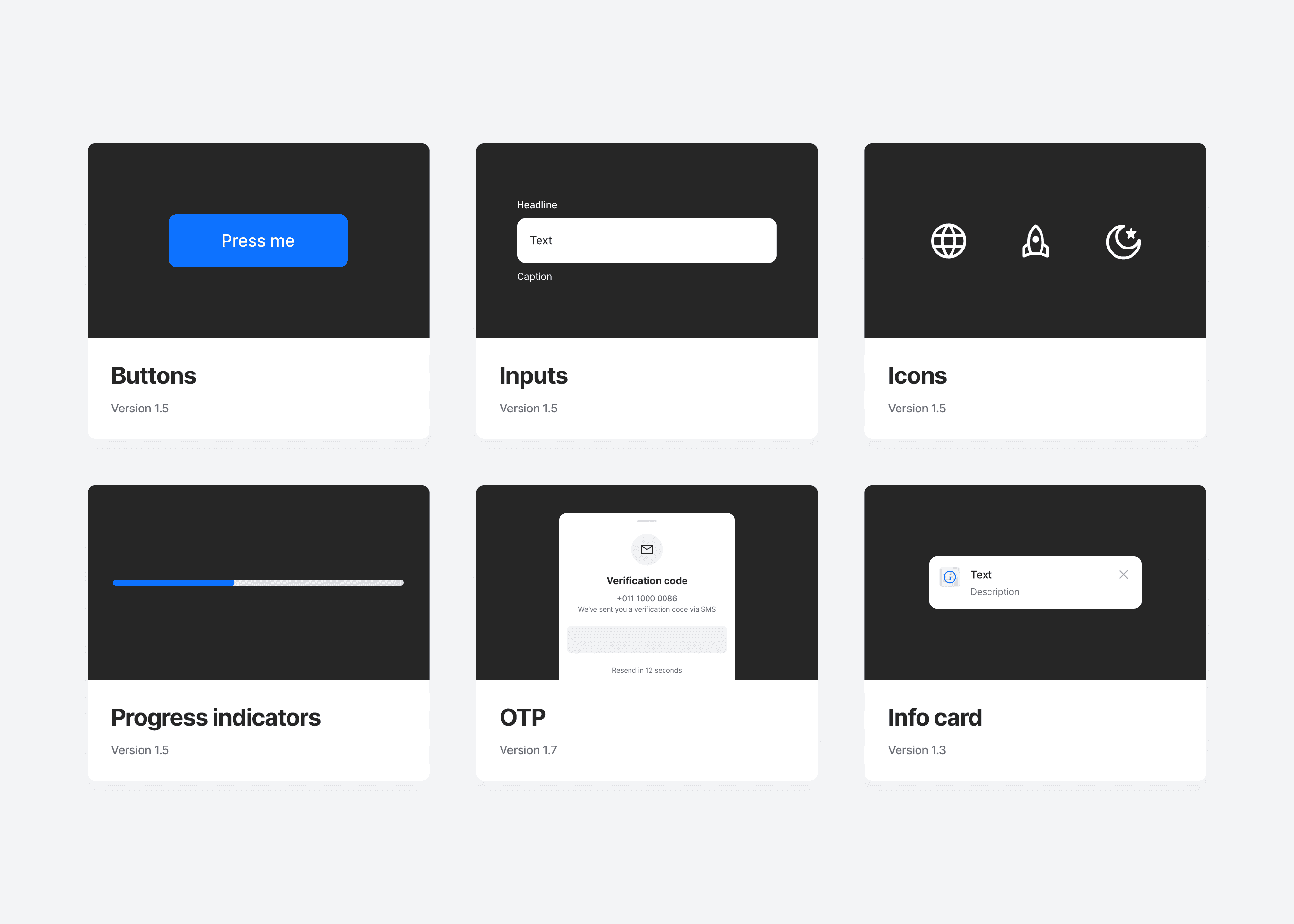
I wrote comprehensive documentation that covered how the design system was structured and how each component should be used. This included usage guidelines, naming conventions, responsive behavior, and interaction states like hover, focus, and disabled. I also described component logic, spacing rules, and how the system scaled across breakpoints.
The goal was to make the system easy to understand and adopt for both designers and developers — especially those joining the project later. I tied documentation closely to Figma Variables and tokens, so the connection between design and code remained consistent and clear.
Introducing tokens
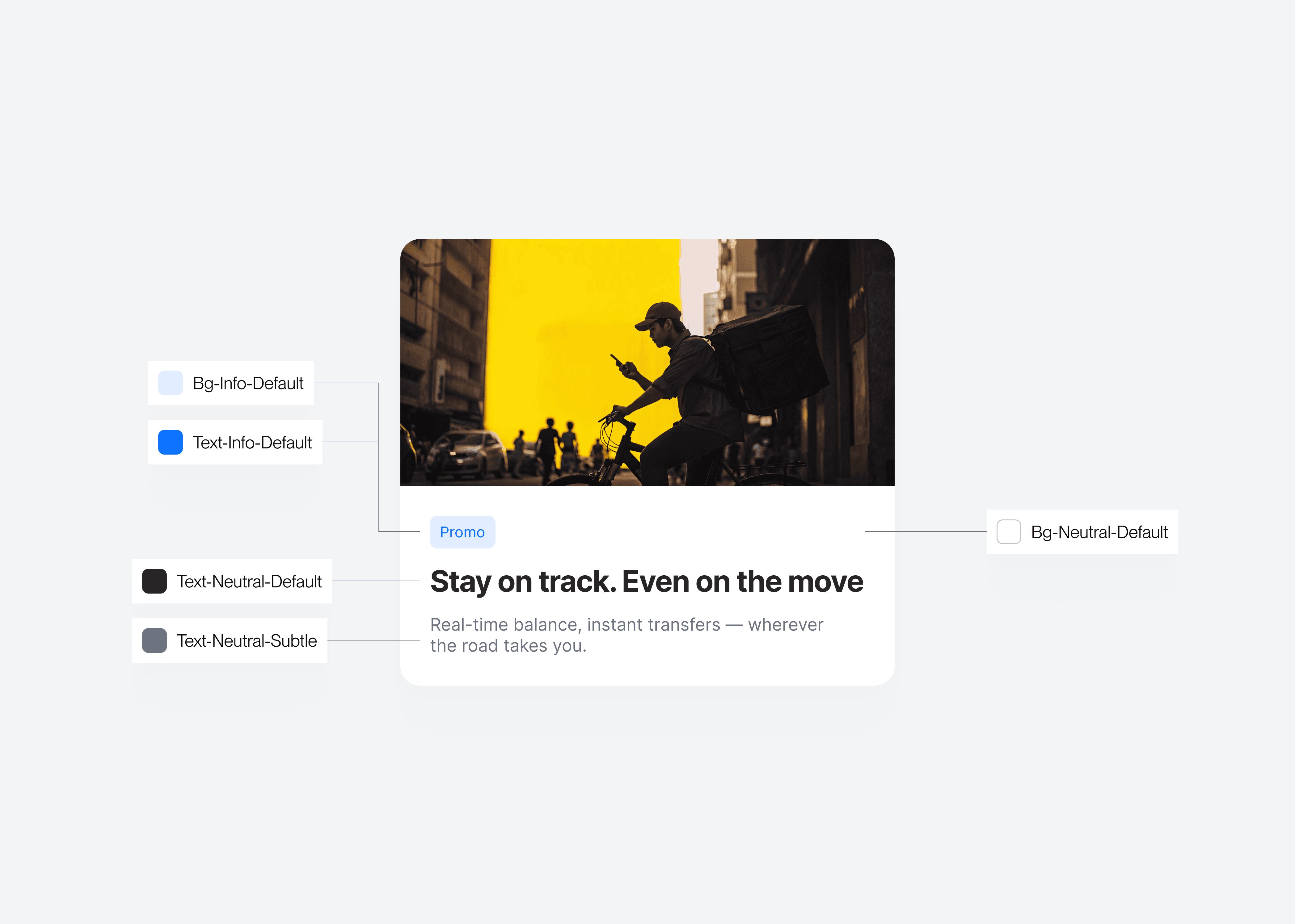
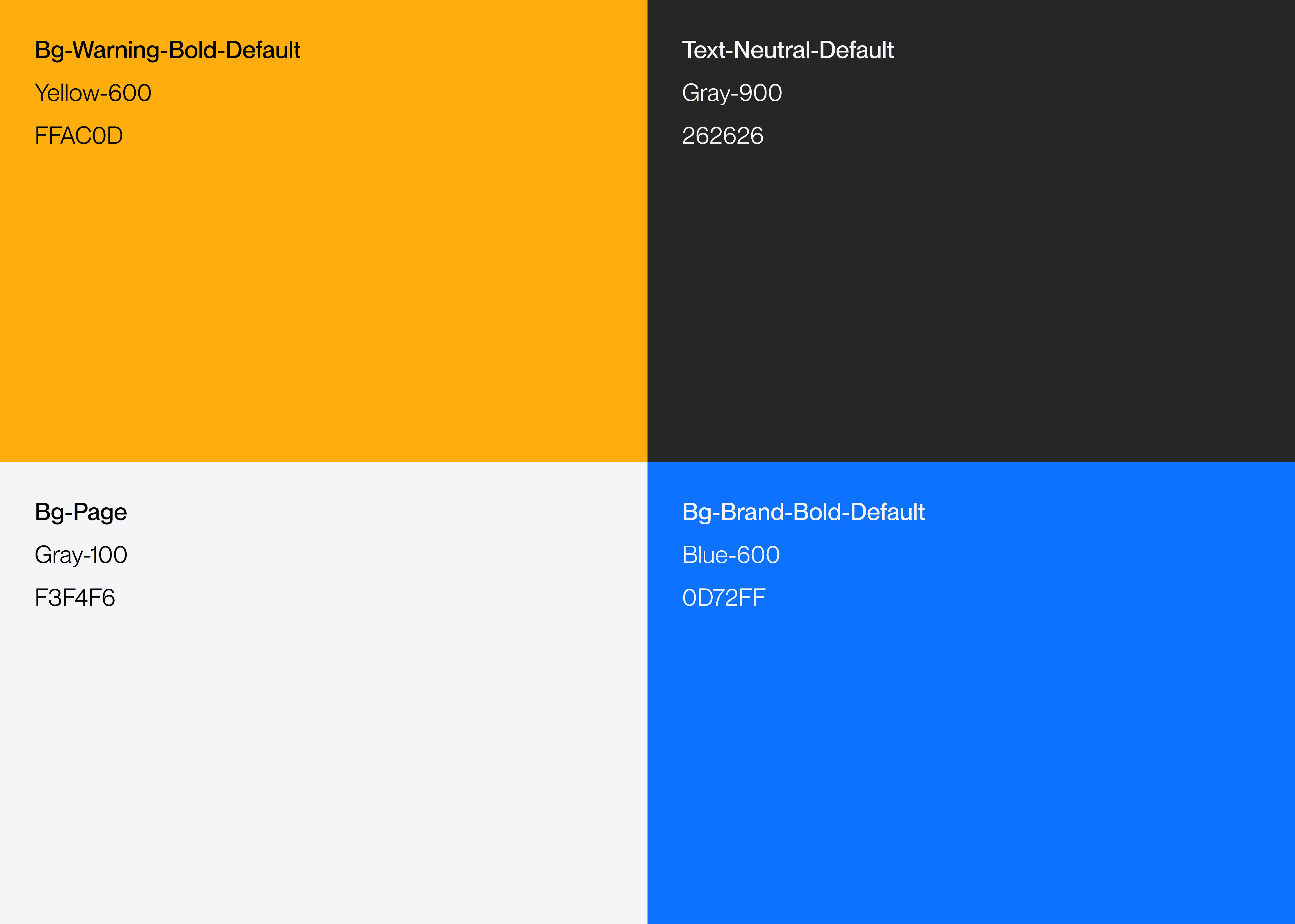
I created a set of color, spacing, and sizing tokens, defined a typography scale, and documented everything. I also trained the design team to work with tokens and collaborated with developers to implement them into code
Design-to-dev workflow
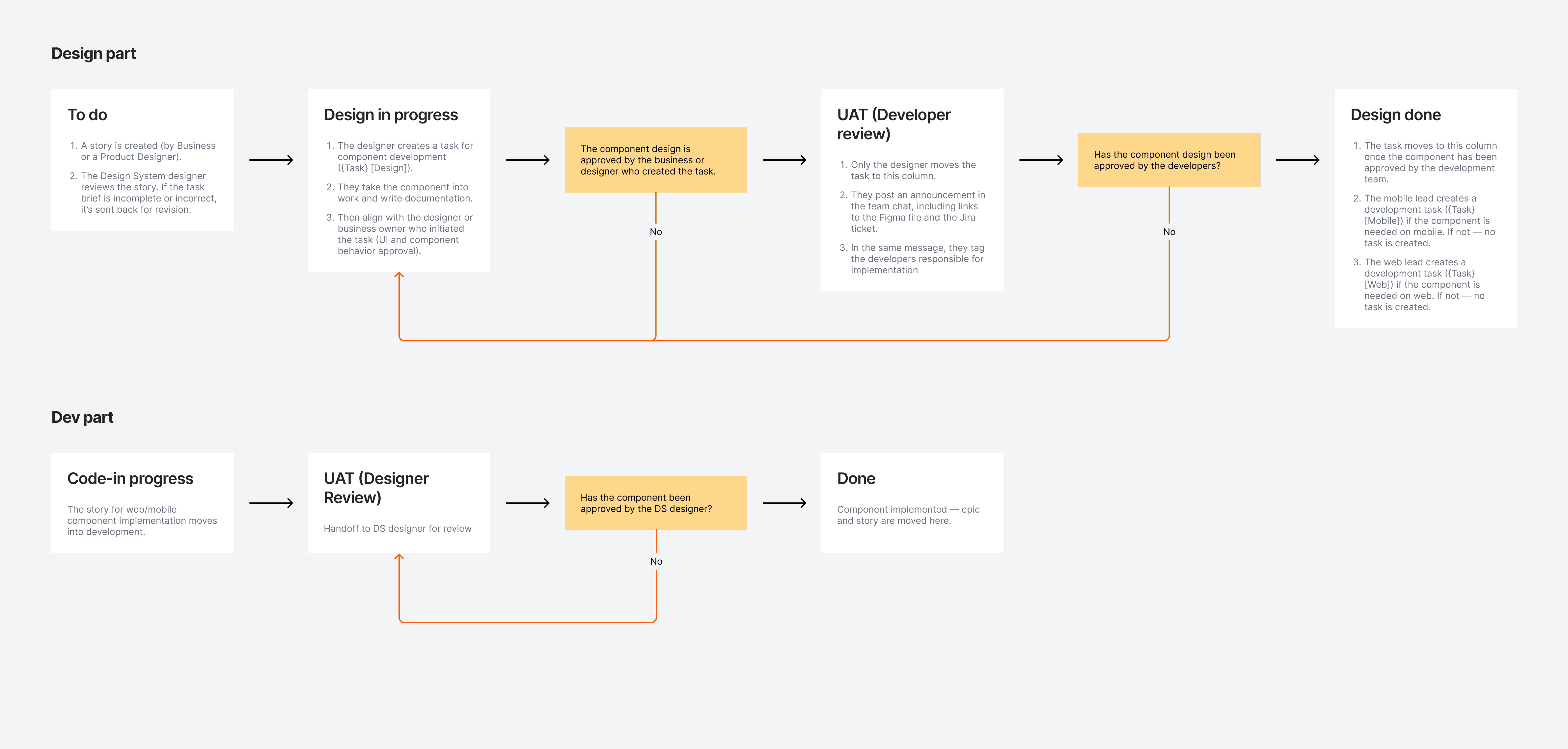
To bridge the gap between design and development, I implemented a shared workflow with clear checkpoints — from initial design tasks to handoff and developer QA. Every component went through a dedicated design-to-dev review (UAT) before coding began.
This allowed us to catch edge cases, clarify specs, and make sure the UI was production-ready. We used a visual board to track the entire process, including feedback loops and testing checkpoints. As a result, our collaboration became more structured and efficient, reducing miscommunication and rework across teams.
After all this work, the design system evolved into a mature foundation for the product, and we achieved the following results: